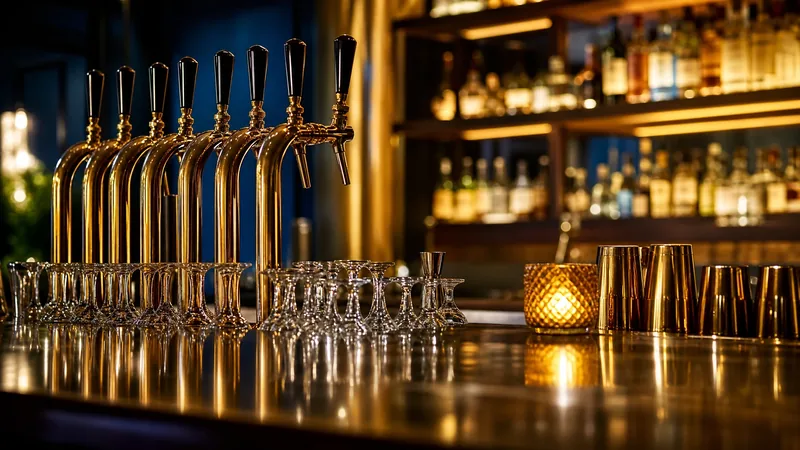
How to Start a Distillery in Colorado: $300 Manufacturer License, Distillery Pub and the 2026 Sales-Room Permit
How to Start a Distillery in Colorado: $300 Manufacturer License, Distillery Pub and the 2026 Sales-Room Permit
Learning how to start a distillery business in Colorado is mostly a sequencing problem. The state does not issue one all-purpose license. Instead, you form your entity with the Colorado Secretary of State, open a Department of Revenue account if you sell or withhold tax, and then add the liquor licenses, federal permit and local approvals that match your operation. File in the wrong order and you can end up waiting on an approval that depends on a filing you have not made yet.
This article is informational, not legal or tax advice. Distilling involves federal, state and local rules, and those rules change. Confirm every fee and deadline with the agency named, and talk with a Colorado attorney or CPA before you sign a lease, buy equipment or accept investors.
Materials, Ingredients and Paperwork You Need
Gather these items before you file anything. Equipment and a suitable location are usually the slowest to secure.
- Base ingredients: malted barley, corn, rye or other grains for your mash bill, distiller's yeast, and treated water. Run small test batches to lock in your recipe before you scale up.
- Production equipment: a mash cooker or tun, fermenters, a still with its heat source, a hydrometer and thermometer for measuring gravity and temperature, and cleaning and sanitizing supplies.
- Storage and packaging: barrels or tanks for aging, bottles, closures, labels and shipping cases.
- Business records: Articles of Organization, a registered agent with a physical Colorado street address, a federal employer identification number from the IRS, and a federal TTB permit application.
- Location documents: a signed lease or deed, written zoning confirmation from your city or county, and a floor plan for your licensing authorities.
- Tax and payroll setup: a Colorado sales tax license if you sell taxable goods, and withholding registration if you pay employees.
Step 1: Choose the Right License Type
Colorado treats a distillery manufacturer and a distillery pub differently, and the fees differ accordingly.
- Manufacturer (distillery) license: $300 state annual fee under C.R.S. 44-3-501. This license covers making spirits. Confirm with the state liquor licensing agency exactly what the license lets you sell and serve on site.
- Distillery pub license: $325 state fee plus a $500 local fee under C.R.S. 44-3-501 and 44-3-505. Choose this if you want to sell and serve drinks at the distillery itself. Check with your local authority for any additional local fees.
Step 2: Form Your LLC With the Secretary of State
Most distilleries organize as limited liability companies. File Articles of Organization online through the Colorado Secretary of State online filing system, and use the Business Organizations Division pages for guidance.
- Check and reserve your name. Your name must include a term such as LLC, Limited Liability Company or Ltd. Liability Company, and it must be distinguishable from existing names on Secretary of State records. Punctuation and capitalization do not count, so ABC Inc and abc inc are treated as the same name. Search the business entity database before you commit. If you need time, a name reservation costs $25 and lasts 120 days.
- Name a registered agent. The agent address must be a physical Colorado street address where documents can be received during business hours. A P.O. box does not qualify. An individual agent must be at least 18 and hold a current Colorado driver's license or state ID card, and you must enter the name and ID number exactly as they appear on that credential. If you have no Colorado ID, you can request an agent passcode, which expires 45 days after it is issued.
- File the Articles of Organization. The filing fee is $50. Online filings process in real time, and the record updates immediately after payment unless you choose a delayed effective date.
- Calendar your periodic report. The Periodic Report costs $25 per year. A new LLC files no periodic report in its first year, and the first one is due in the second year. You may file it as early as two months before your periodic report month or as late as two months after it without penalty. An entity that does not file becomes delinquent.
If you will operate under a name other than the LLC's legal name, file a Statement of Trade Name. Trade names are filed statewide with the Secretary of State, not with the county. The filing costs $20 online and $5 to renew.
Step 3: Apply for Your Federal TTB Permit
Your Colorado license does not replace the federal permit. The Alcohol and Tobacco Tax and Trade Bureau (TTB) regulates distilling operations and alcohol labeling separately. Visit ttb.gov to confirm the current application process and any fees, because this guide does not list federal fees. Treat the federal review as its own timeline, and do not sign equipment or lease commitments that depend on a permit date you have not confirmed.
Step 4: Secure a Zoned Location
Your city or county building and zoning office decides whether a distillery can operate at a particular address. Ask specifically about manufacturing use and about a tasting or sales room, because they may be treated differently. Get written confirmation before you sign a lease.
Senate Bill 24-231, signed May 18, 2024, allows a distillery to manufacture at up to two noncontiguous locations, and each location carries an annual fee. This guide does not state that fee, so confirm it with the state liquor licensing agency before you plan a second site.
Step 5: Open Your Department of Revenue Account
The Colorado Department of Revenue, Taxation Division, administers the taxes you will owe. For most distilleries, these points apply:
- State sales tax: The state rate is 2.9%, plus any special district taxes. Most sellers of tangible goods need a Colorado sales tax license, and bottles and drinks you sell fall into that category. Apply through the Colorado sales tax license page.
- Home-rule cities: Denver, Aurora, Colorado Springs, Boulder and Fort Collins license and collect their own city sales tax. The state license does not cover them. If your distillery sits inside one of these cities, apply directly with the city as well.
- Income tax: An LLC passes its income through to its owners, who pay Colorado's flat 4.40% state income tax. A corporation pays the flat 4.40% corporate income tax. Your accountant should confirm which structure fits your plans.
- Services: Services are generally not subject to state sales tax. Ask the Department of Revenue how it treats tour fees, event charges or other service income for your setup. More information is available at tax.colorado.gov.
Step 6: File the State and Local Liquor Applications
Liquor licenses come from two authorities: the state liquor licensing agency, which operates through the Liquor Enforcement Division, and your local licensing authority, which is the city or county where the premises sit. Assemble your ownership information and a detailed premises description before you apply, because incomplete applications slow every step that follows. Confirm the sequence, required forms and current fees with each authority, since the local process can differ from one jurisdiction to the next.
Put renewal dates on your calendar the day you receive your license. Renewal timing is 45 days for the local authority and 30 days for the state, so a missed date can disrupt your operations.
Step 7: Add the 2026 Sales-Room Permit If You Want Other Brands
Colorado has changed sales-room rules twice in recent years, and you need both changes in mind when you plan your tasting room.
- Cocktails under SB24-231 (2024): A sales room may use common alcohol modifiers to make cocktails.
- Wholesaler-supplied alcohol under SB26-114: Signed May 29, 2026, and effective August 12, 2026, this law allows a spirits manufacturer to sell and serve other manufacturers' wholesaler-supplied alcohol at its sales room. You need a local permit plus a state permit.
The SB26-114 permit comes with conditions you must plan around:
- The 50% cap: Sales of wholesaler-sourced alcohol can be at most 50% of your gross annual alcohol revenue. Track this figure monthly, not just at year end.
- Food: You must serve sandwiches and light snacks.
- Neighborhood standard: Your local authority applies the neighborhood standard when it decides whether to grant the permit.
- Sequence: Apply locally first, then apply with the state.
- Fees: Check local fees with your licensing authority. This guide does not list them.
Two other 2026 bills, HB26-1190 (an expanded sales-room permit) and SB26-094 (alternating premises), did not pass. Do not build your business plan around either one.
Step 8: Handle Payroll, Labels and Ongoing Compliance
If you hire anyone, register for withholding with the Department of Revenue. Check with the FAMLI Division on your premium obligations for employees. Labels fall under federal rules, so confirm the label approval process with TTB before you print a run. Keep your TTB, state and local approvals in one folder so you can answer renewal and inspection questions quickly.
Common Mistakes to Avoid
- Signing a lease first. Get zoning confirmed in writing before you commit to a space.
- Assuming the state sales tax license covers everything. Home-rule cities such as Denver and Boulder collect their own city sales tax.
- Using a P.O. box for your registered agent. The address must be a physical Colorado street address.
- Missing the periodic report. An LLC that does not file becomes delinquent.
- Filing a trade name with the county. Colorado trade names are filed with the Secretary of State.
- Losing track of the 50% cap. Once wholesaler-sourced sales pass half of gross alcohol revenue, you are out of compliance with the permit's terms.
- Making health claims. Describe your spirits by ingredients, process, origin and taste. Do not say or imply that your product treats, prevents or cures any condition. FDA and TTB rules on claims apply, so check with both agencies before you publish marketing copy.
What Results to Expect
A distillery that completes these steps in the right order is positioned to open legally. The state filings are usually the quick part, because online Secretary of State filings process in real time. The slower items are often local zoning and liquor approvals, equipment lead times and federal permit review. Those timelines depend heavily on your city or county and your suppliers, so build extra time and budget into your plan.
Revenue depends on your market, pricing, distribution and the sales-room options you choose. Treat any sales target as a hypothesis to test, not a guaranteed outcome. On labels and marketing, FDA and TTB rules may limit what you can say about health effects, so keep your language factual and confirm it with each agency.
Official Colorado and Federal Resources
- Colorado Secretary of State, Business Organizations: https://www.coloradosos.gov/pubs/business/businessHome.html
- Secretary of State online filing: https://www.coloradosos.gov/pubs/business/fileAForm.html
- Business entity search: https://www.coloradosos.gov/biz/BusinessEntityCriteriaExt.do
- Entity name requirements and reservation: https://www.coloradosos.gov/pubs/business/FAQs/entityNames.html
- Trade names: https://www.coloradosos.gov/pubs/business/FAQs/tradeNames.html
- Colorado Department of Revenue: https://tax.colorado.gov/
- Colorado sales tax license: https://tax.colorado.gov/how-to-apply-for-a-colorado-sales-tax-license
- Federal Alcohol and Tobacco Tax and Trade Bureau: https://www.ttb.gov
- Colorado Small Business Development Center Network: https://sbdc.colorado.gov/
- SBA Colorado district office: https://www.sba.gov/district/colorado
For liquor license applications and renewals, contact the state liquor licensing agency (the Liquor Enforcement Division) and your local licensing authority directly, since their forms and current fees are not listed in this guide.
If your structure, lease or sales-room plan is complicated, meet with a qualified Colorado attorney and a CPA before you file. A Small Business Development Center advisor can also help you sequence the steps.
Keep exploring: related Colorado guides
- Colorado Cottage Food Law
- How to Start a Food Truck in Colorado
- How to Start a Coffee Shop Business in Colorado
- How to Start a Catering Business in Colorado
- Colorado Food Truck License
- How to Start an LLC in Colorado
- Colorado Business License
- How Much Does It Cost to Start a Business in Colorado
- All Colorado business types
- Every Colorado guide in one place